70%

MMG Capital Group, Inc. (MMG) manages two funds under the Maryland Department of Commerce, the Maryland Small Business Development Financing Authority (MSBDFA) and the Maryland Casino Business Investment Fund (MCBIF). These funds offer affordable flexible financing products including lines of credit, term loans, surety bonding, contract financing, and equity financing on reasonable terms to Maryland-based businesses, in particular businesses who may have credit challenges, collateral gaps, and limited financial resources.
The Maryland Small Business Development Financing Authority (MSBDFA) was created in 1978 for the purpose of promoting the viability and expansion of businesses owned by economically or socially disadvantaged entrepreneurs. The MSBDFA statute was later expanded to include any small business that does not meet the credit criteria of financial institutions and commercial sureties and, consequently are unable to obtain adequate financial assistance on reasonable terms. Since 1995, MSBDFA has provided over $239 million in financing to over 761 small businesses in Maryland. MSBDFA has been recognized as a “National Model” for creative financing of small minority-owned businesses. MSBDFA has the following components: Contract Financing, Loan Guaranty, Equity Participation Investment Program and Surety Bonding. Click here for more information about the MSBDFA programs.
Financing decisions are voted on and approved by members of the MSBDFA Authority. For more information about the Authority members click here.
The State of Maryland established the Small, Minority, and Women-Owned Business Account which is administered by the Maryland Department of Commerce (the “Account”). The Account receives 1.5% of the proceeds from video lottery terminal (i.e., slot machine) facilities located in Maryland (“VLT Facilities”). Commerce makes grants from the Account to certain fund managers so they may provide loans to small, minority and women-owned businesses in Maryland. Since 2014, MCBIF (formed and managed by MMG), being one of nine VLT funds throughout the state, has provided over $31 million in financing to over 145 small businesses in Maryland.
MMG Capital Group is one of the fund managers that receives funds from the Account. The Maryland Casino Business Investment Fund (“MCBIF”), which is managed by MMG Capital Group, uses the Account funds it receives to provide loans to small, minority and women-owned businesses in Maryland.
MCBIF provides affordable, flexible, and patient capital to assist in the acquisition of businesses, equipment, owner-occupied commercial real estate, vehicles, furniture/fixtures, and lease hold improvements. It also provides working capital assistance for maintaining and improving business cash flow; marketing; adding personnel; inventory expansion; and obtaining professional consulting assistance. In addition, it refinances existing debt under certain circumstances.
In its effort to continue to expand its resources and capability to provide the right financing under the right terms to underserved markets, MMG is in discussions with UPI Loan Fund, a 501c3 and a division of Unified Progress International (UPI) Education (“UPI”) to develop a loan fund to provide financing to companies across the country. UPI Loan Fund is a “like minded”, nonprofit, Community Development Financing Institution (“CDFI”), based in Scottsdale, Arizona. UPI was formed in 2004 by Frank Crump with a mission to serve the needs of communities by giving individuals, families, veterans, and businesses an affordable loan option coupled with first class Behavioral Financial Wellness training.

President & CEO
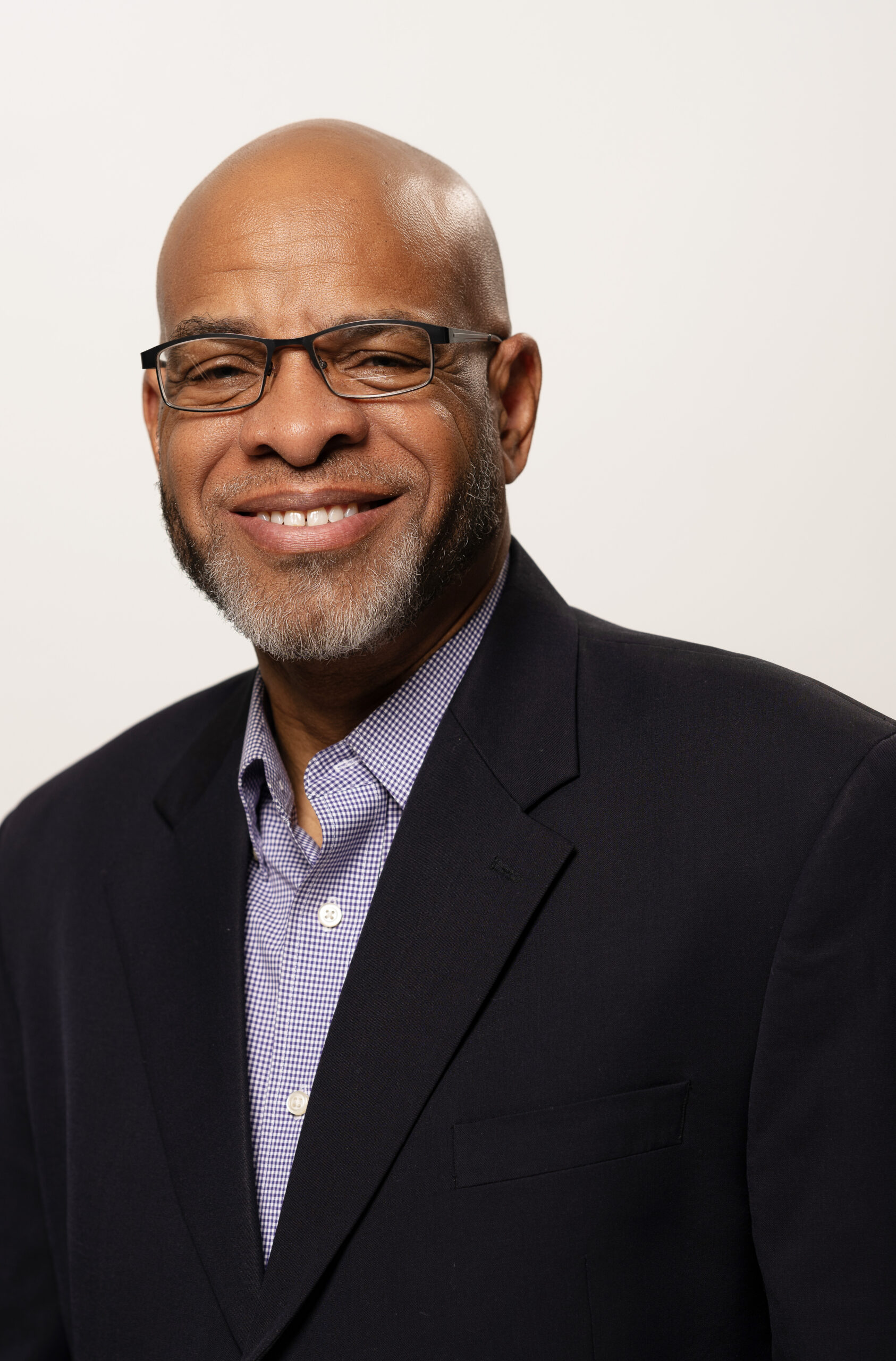
Executive Vice President & CFO

Executive Vice President & CIO

President of MAG (an MMG Company)

Vice President Equity Investing

Vice President Strategic Partnership & Lending

Vice President

Loan Underwriter
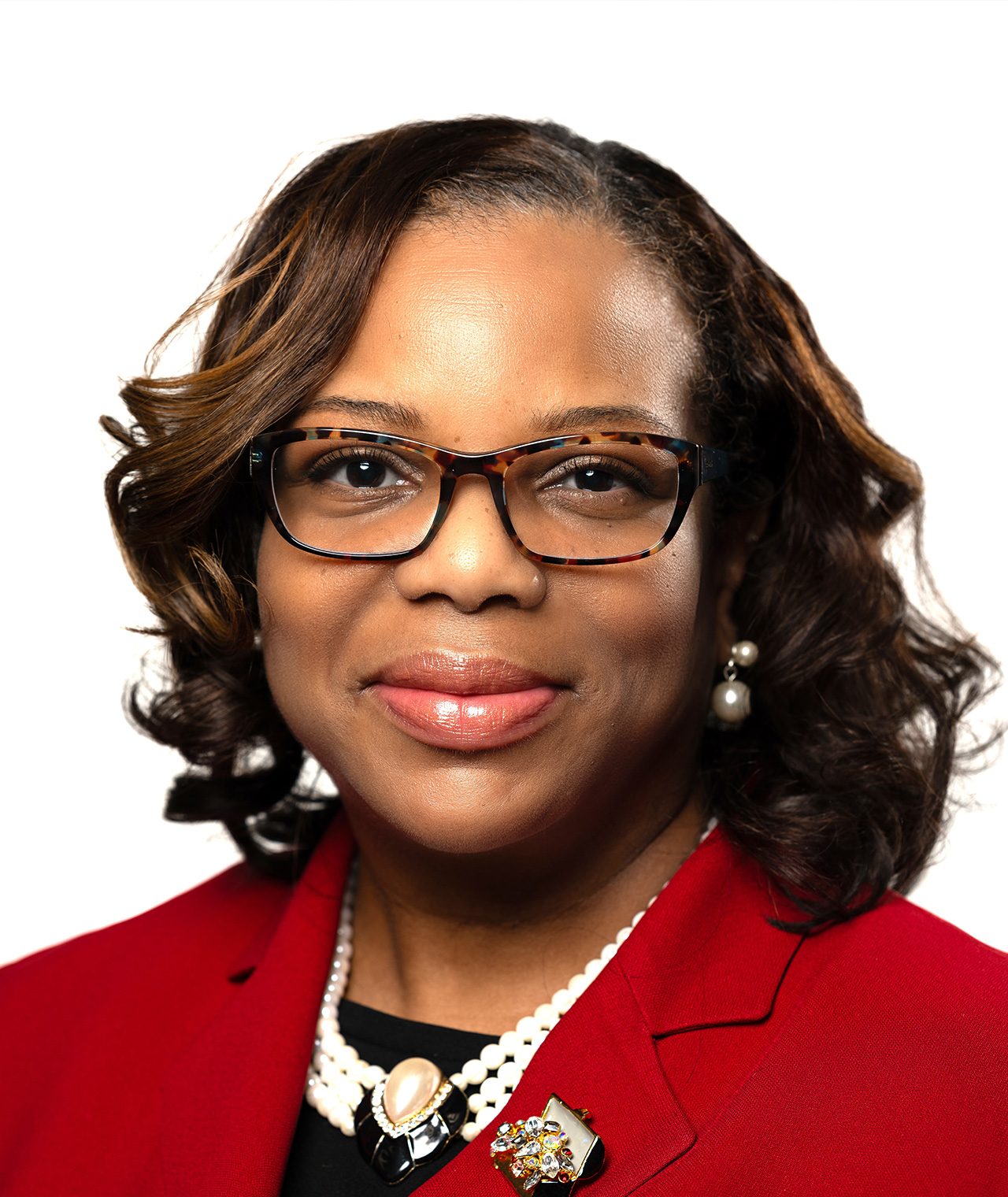
Assistant Vice President

Operations Administrator

Document Management & Marketing Specialist

Controller

Accounting Specialist
MMG Capital Group has been providing small businesses with “impact financing” long before the term became a popular industry buzzword. We have always believed that successful small business financing and positive social impact are achievable. We are dedicated to investing in companies led by minorities, women, and veterans, recognizing their unique perspectives and strengths.
We strive to empower entrepreneurs who lack access to adequate capital by providing the financial support and resources they need to thrive.
We are committed to leveling the playing field, ensuring that all entrepreneurs have equal opportunities to succeed.
By investing in diverse leadership, we aim to foster economic growth and create a positive change within the economy of our communities.
We believe that diverse teams drive innovation, and we are dedicated to supporting visionary leaders who are shaping the future.
Through our small business financings, we aim to build a more inclusive and equitable business landscape and economy that benefits everyone.
We are “impact investors.” By supporting small businesses and diverse entrepreneurs, we contribute to the strength and vitality of the economy and our communities while generating positive financial returns.
MMG Awarded Contract to Manage MSBDFA Programs. Meridian Management Group, Inc. dba MMG Capital Group (“MMG”) is founded by Stanley Tucker, Catherine Lockhart, Timothy Smoot, and Randy Croxton. The same year, MMG begins managing the Maryland Small Business Development Financing Authority (MSBDFA).
Ventures was an investment fund licensed by the U.S. Small Business Administration as a Specialized Small Business Investment Company (“SSBIC”). Ventures focused on providing equity funding to minority owned businesses in Maryland and nationwide. CDV was established as a non-profit 501(C)(3) company that provided debt and equity funding to businesses in “Socially and Economically Distressed” areas in Maryland. Both Ventures and CDV funds successfully fulfilled their missions over their respective lifespans.
Maryland passed a law allowing video lottery terminals (VLT), commonly known as slot machines, to be operated at racetracks and other venues. MMG introduced a financing strategy to the Maryland Legislative Black Caucus that required casino owners contributing 1.5% of its VLT gross revenue to the state to form a fund that would provide debt and equity funding to small businesses, minority, women and veteran owned businesses in Maryland.
MMG establishes MCBIF, which has provided over $31 million in financing to over 145 small businesses in Maryland. Many of the firms receiving financing were minority-owned and women-owned businesses, significantly boosting capital access for underserved entrepreneurs.
MMG changes name, logo, and tagline while maintaining its ongoing commitment to finance and grow small, minority, women and veteran owned businesses. We believe this rebranding will help us more effectively communicate our focus and dedication to fostering a growing, diverse and inclusive business community.
As President and CEO, Stanley W. Tucker oversees and supervises MMG’s daily operations and provides the vision for the overall organization. He is involved in marketing strategy, initiating, structuring, syndicating and monitoring of investments, as well as review of financial reports and financial plans for MMG and its managed funds. Mr. Tucker has 38 years of diversified business experience with a strong emphasis on lending, venture capital investing and the development of socially or economically disadvantaged small businesses. Prior to forming MMG, which has managed the Maryland Small Business Development Financing Authority (MSBDFA) since 1995, Mr. Tucker was the Executive Director of MSBDFA from 1981 to 1995. He developed his skills as a credit analyst while working for Equitable Trust Company of Baltimore from 1979 to 1980.
Mr. Tucker is a nationally sought-after speaker and consultant on minority business development. He received his bachelor’s degree from Morgan State University and graduate degree from Carnegie-Mellon University.
Tim Smoot is Executive Vice President and Chief Financial Officer (CFO) of MMG. He has more than 30 years of experience in business finance and accounting, with the majority concentrated in small and minority businesses.
He is a co-founder and principal of MMG.
Since joining MSBDFA in late 1985, he has been responsible for underwriting, deal structuring and monitoring the performance of MSBDFA portfolio companies that receive loans, loan guarantees, equity-type investments and surety bond financing. He received his bachelor’s degree from Morgan State University in 1980. In 1985, Mr. Smoot received his license as a certified public accountant in Maryland.
Anthony Williams, Executive Vice President and Chief Investment Officer (CIO) has more than 30 years of experience in the public and private financing arena, with particular emphasis on small and minority business development, venture capital, and private equity investing.
He has been with MMG since 1998 and has 20 years of experience working with MSBDFA.
As the Chief Investment Officer, Mr. Williams is responsible for Portfolio Company investing, financial planning and analysis, underwriting, structuring, closing, syndications, and monitoring of portfolio company investments.
Mr. Williams is a licensed attorney and graduated from the University of Southern California with both a law degree and a master’s degree in public administration. He also received a bachelor’s degree in economics from the University of California at Irvine.
Alex Agwuna is President of MAG, an MMG affiliated company and subcontractor.
Mr. Agwuna has more than 35 years of experience in finance and accounting primarily in the small and minority business development.
He has more than 29 years of experience in management of MSBDFA as a state employee and through his subcontract activities with MAG.
From 1988 to 2001, Mr. Agwuna served as a Portfolio Manager with the Maryland Small Business Development Financing Authority (MSBDFA) and was responsible for management and administration of the program portfolio.
Mr. Agwuna is a Certified Economic Development Finance Professional. He received his B.B.A. in Finance and Economics from the University of Texas and an M.B.A. in Accounting from Morgan State University.
Mark Harrison is Vice President and Investment Officer who is a seasoned professional with more than 30 years of experience in the areas of business finance, strategic transactions, and corporate law. He has vast experience in a range of financing transactions, from venture capital funding to equity and debt investing with lower/middle market firms.
Mr. Harrison has been a Vice President at MMG since October 2016. Prior to joining MMG, he served as the Entrepreneur-in-Residence at the U.S. Small Business Administration Office of Advocacy from 2014 to 2016.
Mr. Harrison served as legal counsel for the MSBDFA programs and the Investment Financing Group while an Assistant Attorney General with the Department of Business & Economic Development. He has practiced corporate and securities law with the U.S. Securities and Exchange Commission in Washington D.C. and the Venable law firm in Baltimore, MD.
Asu is Vice President of Strategic Partnerships and Lending, Meridian Management Group, Inc. She is a commercial lending professional with over a decade of experience in leveraged lending, specializing in structuring leveraged buyouts and supporting acquisition entrepreneurs.
As the Vice President of Strategic Partnerships and Lending at Meridian Management Group, Inc. (MMG), Asu plays a critical role in driving loan volume, managing the loan portfolio, and sourcing strategic partnerships.
Asu’s strategic leadership is instrumental in MMG’s mission to support small businesses and contribute to economic growth.
Taber J. Small is a Vice President and Loan Officer for MMG Capital Group. Prior to joining MMG, Mr. Small was an experienced commercial lender with previous employment at Bank of America, Wells Fargo, PNC, JP Morgan Chase and recently WesBanco Bank as a Senior Vice President Commercial Banker in middle market banking. During his tenure as a banker, he received numerous star banker awards and received the Omega Commercial Lending Advanced Credit Training Certificate of Achievement. He is a graduate of the University of Connecticut with a B.A. in Economics.
Mr. Taber is also very involved in the community and serves on numerous boards of organizations such as Associated Black Charities, Baltimore City Chamber of Commerce, 29th Street Community Center and NPOWER. He also serves on the development committee of the Reginald F. Lewis Museum and is a member of the Platinum Center Club based in Baltimore.
Marcella Nazario is a Loan Underwriter at MMG. She is a financial professional with extensive expertise in small business lending, underwriting, and technical assistance. Holding an MBA from Texas A&M University – Commerce and currently pursuing a Project Management certificate from Georgetown University, Marcella combines strong academic credentials with practical experience.
As a Loan Underwriter with MMG, she plays a critical role in evaluating and structuring loan transactions, performing detailed financial analyses, and assessing borrower risk.
Before joining MMG in 2001, Robin Harris developed her skills while working at the World Bank providing administrative, operational, project, and portfolio management support for multi-million and multi-billion-dollar international economic development projects and portfolios. She has more than 20 years’ experience working with MMG providing the same support for small and minority-owned business development. Responsible for overseeing the company’s daily operations; setting policy and procedures and monitoring compliance; quality control reviews for loan committee packages and closed loan credit files; internal loan committee deal reviews; strategic planning, monthly and annual report monitoring and analysis, and facilities management.
Mrs. Harris graduated Magna Cum Laude from Morgan State University with a bachelor’s degree in finance and earned her Economic Development Finance Professional Certification from the National Development Council.
Latoya Haynes joined MMG in 2012 and has twenty years of experience in providing administrative support. Responsible for loan origination processing including initial due diligence application package review, report generation, and file maintenance; maintaining and monitoring loan status reports including loan renewals; and tracking and maintaining digital loan credit file content through closing. Latoya also participates in the Investment Committee meetings transcribing minutes, compiling and transmitting loan committee review packages.
Jasmine Harris started working with MMG as an intern maintaining MMG’s monthly marketing activity reports and became an employee in 2020. As the Document Management Specialist, responsible for managing the company’s online application portals: monitoring activity, processing submitted applications, and providing tech support. Jasmine also maintains the portfolio companies’ digital credit files and legal documents which includes storing and bookmarking electronic documents such as PDFs, word processing files, and digital images of paper-based content.
As the Marketing Specialist, responsible for maintaining MMG’s monthly marketing activity reports; managing the logistics for all staff event registrations; creating promotional materials for digital marketing and traditional advertising channels; and assists in planning and executing the company’s marketing strategies.
Janelle Augustus has more than 15 years as an accountant and financial executive. Responsible for high-level financial operations for private businesses and public sector entities. Responsible for management and oversight of all aspects of financial administration, such as budget and forecast preparation, corporate accounting, development of internal controls, policies and procedures, regulatory and financial reporting, and analysis of financial data. Coordinates efforts with the certified public accountants and auditors of Merdian Management Group and its affiliate companies in the preparation of financial statements and tax returns. Provides assistance to the CFO and other corporate managers in making key financial decisions for each of the entities.
Ms. Thompson started working with MMG as an intern maintaining the accounting files and became an employee in 2020. Responsible for maintaining the accounting filing systems, both hard copy and digital, to create an organized and seamless workflow made accessible to the accounting department. Genevieve’s support also includes maintenance of loan history spreadsheets, financial statements, tax returns, vendor invoices, portfolio company invoices, and in house accounting ledgers and logs. She also reconciles vendor invoices to ensure accuracy for payment and assists with posting journal entries. Ms. Thompson is currently studying to receive a bachelor’s degree in accounting.
Content to be added soon…
Michael Howard is a Senior Investment Officer with MMG. He is also the Founder and Managing Member of the MJH Group, a private investment and management consulting firm.
He has more than 25 years of finance, investment and board experience.
Mr. Howard has received numerous awards for his distinguished leadership including being recognized by a national publication for his success as a private investor in early-stage technology companies.
His vast experience includes stints with the US Securities and Exchange Commission’s Division of Corporation Finance and PricewaterhouseCoopers’ High Technology Business Assurance team.
He is a Certified Public Accountant (CPA) with a degree in Accounting from Morgan State University.
The Surety Bond Program assists eligible small businesses in obtaining bid, performance or payment bonds necessary to perform on contracts funded by a government agency, a regulated public utility or a private entity. The program directly issues bid, performance or payment bonds, or guarantees a commercial surety’s losses incurred as a result of the contractor’s breach of a bid, performance or payment bond. Bonds issued directly by the Program and those guaranteed by the Program remain in effect for the duration of the qualified contract and any related maintenance or warranty period. A surety bonding line of credit may be established for a qualified business within pre-approved terms, conditions and limitations. These financings are renewable on an annual basis.
Maximum Policy Limits:
Premiums:
Fees:
Equity Participation Investment Program assists in the expansion of business ownership and small businesses that do not meet the established credit criteria of financial institutions and/or investors. Financial assistance may be provided in the form of loans, the purchase of qualified securities and partnership interests, subordinated debt and other equity-type investments. Debt must be repaid by, and equity investments must be returned to, MSBDFA within seven years.
General Eligibility:
Maximum Amount: $2 million
Interest Rates (for loans): Generally 7% – 12%
Rates of Return (for equity): Generally 15% – 22%
Collateral (for loans): Can consist of business and personal assets
Use of Proceeds:
Refinancing existing debt (if it improves cash flow).
Guaranty Fund Program (GFP) provides financial assistance to eligible businesses in the form of loan guaranties and interest rate subsidies for loans made by financial institutions (i.e. Banks, Finance Companies, Leasing Companies). A loan guaranty cannot exceed the lesser of 80 percent of the loan or $2,000,000. Loan proceeds can be used for working capital, the acquisition and installation of machinery or equipment, refinancing of existing debt and the purchase of, and improvements to, real property owned or leased by the applicant. GFP can also subsidize up to four (4) percentage points of the interest being charged by the financial institution making the loan. The subsidy is subject to an annual review. Terms of repayment of the subsidy are negotiated directly with the borrower.
General Eligibility:
Maximum Policy Limits: Lesser of 80% of Lender’s losses or $2,000,000
Interest Rates: Generally Prime Rate – Prime Rate + 2% Term: Not to Exceed Ten (10) Years
Guarantee Fees:
For Lines of Credit: .75% – 1.5% of the maximum amount of the loan
For Term Loans: .75% – 1.5% annually on the balance of the loan
Use of Proceeds: Working Capital, Purchase of Machinery and Equipment, Refinancing of Existing Debt, and the Acquisition/Improvements of Real Property.
The EPIP purpose is to expand business ownership by socially and economically disadvantaged entrepreneurs and small businesses that do not meet the established credit criteria of financial institutions and are unable to obtain adequate business financing on reasonable terms through normal financing channels. Financial assistance is provided through the use of loans, loan guaranties, and equity investments. The proceeds are used for the specific purpose of purchasing a franchise, acquiring an existing profitable business, developing a technology-based business and to start or expand other types of small businesses. Equity investments may take the form of the purchase of qualified securities, convertible debt, interest in a limited partnership or a limited liability company, simple agreements for future equity (SAFE) other debt and equity investments. All loans and equity investments must be recaptured by the end of the seventh year.
SBP assists eligible small businesses in obtaining bid, performance or payment bonds necessary to perform on contracts where the majority of funds are provided by a government agency, public utility company or private entity. SBP directly issues bid, performance or payment bonds or guarantees a surety’s losses incurred as a result of the contractor’s breach of a bid, performance or payment bond. Bonds that are directly issued are limited to $2,500,000. Guaranties are limited to 90% of the face value of the bond not to exceed a maximum participation of $2,500,000. Guaranties on bonds remain in effect for the duration of the surety’s exposure under the bond. Bonds issued directly will remain in effect for the duration of the qualified contract and any related warranty period. Bond premiums generally range from 2% to 3%. Also, a surety bond revolving line of credit may be established to directly issue or guaranty multiple bonds to a client within pre-approved terms, conditions and limitations.
The GFP provides financial assistance to eligible businesses in the form of loan guaranties and interest rate subsidies for loans made by financial institutions. A loan guaranty cannot exceed the lesser of 80 percent of the loan or $2,000,000. Guaranties cannot exceed 10 years with an interest rate charged by the financial institution limited to prime plus two percent. GFP can also subsidize up to four percentage points of the interest being charged by the financial institution making the loan. The subsidy is subject to an annual review. Terms of repayment of the subsidy are negotiated directly with the borrower. Loan proceeds can be used for working capital, the acquisition and installation of machinery or equipment, refinancing of existing debt and the purchase of, and improvements to, real property owned or leased by the applicant.
CFP provides financial assistance to eligible businesses in the form of direct loans. The funds may be used for working capital and the acquisition of equipment needed to begin, continue, or complete work on contracts where a majority of funds are provided by a federal, state or local government agency or utilities regulated by the Public Service Commission. Financing is limited to $2,000,000 and must be repaid during the term of the contract. Interest rates range from the prevailing prime to prime plus 2 percent. Applicants may qualify for financing prior to contract award.
Contract Financing Program (CFP) provides financial assistance to eligible businesses in the form of direct loans. The funds may be used for working capital and the acquisition of equipment needed to begin, continue, or complete work on contracts where a majority of funds are provided by a federal, state or local government agency or utilities regulated by the Public Service Commission. Financing is limited to $2,000,000 and must be repaid during the term of the contract(s). Applicants may qualify for financing prior to contract award. Financings in the form of revolving lines of credit are renewable on an annual basis.
General Eligibility:
Maximum Policy Limits: Loans Provided Directly by MSBDFA $2,000,000
Interest Rates: Generally Prime Rate + 2% Payments: Principal and interest are payable as contract proceeds are received, in amounts satisfactory to MMG and the Authority. All Payments must be assigned to MSBDFA
Term: Duration of the Contract(s)
Use of Proceeds: Working Capital, Purchase of Machinery and Equipment, Supplies and Materials (Required to perform the contracts)